

Acrylic paint is a popular medium for artists of all skill levels, valued for its vibrant colours and quick drying time. Choosing the right surface to paint on is essential for achieving the best results with acrylics.
The best paper for acrylic paint needs to be thick enough to handle moisture without warping whilst providing good tooth for paint adhesion.
When selecting paper for acrylic painting, weight is the most critical factor to consider. Papers rated at 300 gsm or higher typically perform best because they resist buckling when wet paint is applied.
Surface texture also matters, as it affects how the paint flows and adheres to the paper. We tested multiple paper options to identify the ones that deliver excellent performance for acrylic painting.
1. STATIONERY ISLAND A4 Acrylic Paper
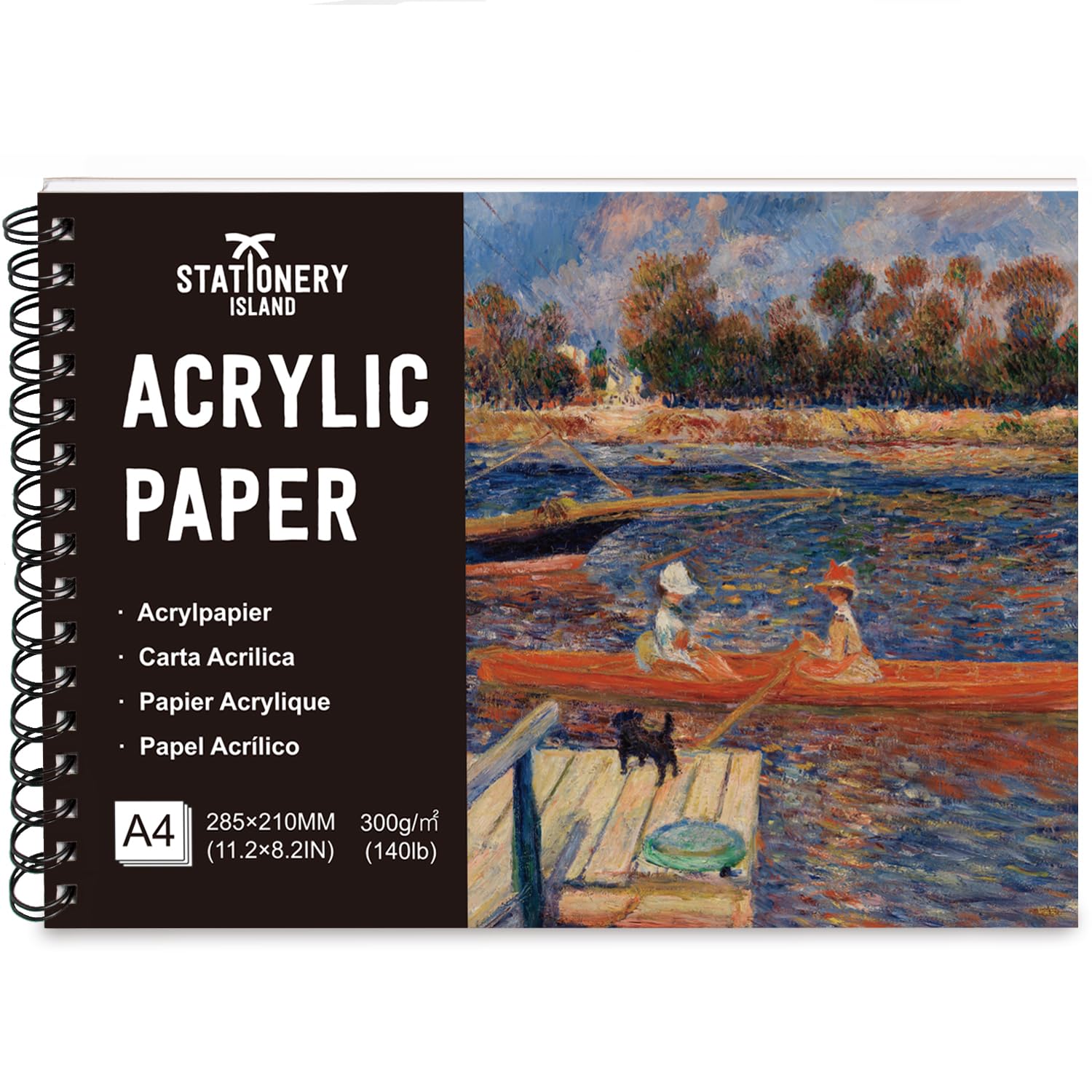
This pad offers solid performance for multiple media at an accessible price point, making it a practical choice for artists who want reliable paper without breaking the bank.
Pros
- The 300gsm weight handles wet media confidently without warping or bleeding through
- Cold-pressed texture grips paint beautifully whilst remaining smooth enough for detailed work
- Spiral binding keeps pages secure and allows the pad to lay completely flat
Cons
- Only 20 sheets means you’ll run through it quickly with regular use, though the quality justifies the sheet count at this price point.
We tested this pad with various acrylic techniques and found it handled everything from thick impasto to thin glazes remarkably well. The surface accepted our paint without any frustrating beading or rejection. Layering worked smoothly, and the paper maintained its integrity even when we applied multiple coats.
The A4 size proved genuinely portable during our outdoor painting sessions. We appreciated how the spiral binding didn’t get in the way whilst working. The pages flipped over easily and stayed put without flopping back.
For students and hobbyists building their skills, this pad strikes an excellent balance between quality and value. We noticed the acid-free composition kept our finished pieces looking fresh. The paper’s firmness allowed us to lift some paint and make corrections without damaging the surface, which gave us more confidence to experiment.
The cold-pressed finish provided just enough tooth to hold our brushstrokes whilst remaining forgiving for finer details. We found it particularly suited to mixed media work where we combined acrylic with ink or pencil. Whilst serious archival work might warrant heavier investment, this pad handles everyday creative practice admirably.
★ BEST BUY
2. Zieler Acrylic Painting Pad
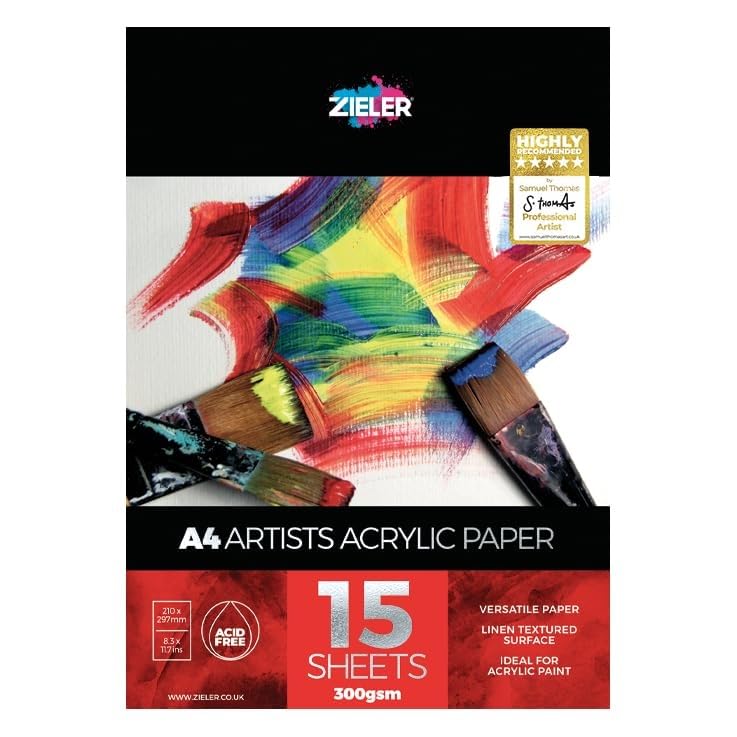
This pad offers decent value for beginners and practice work, though it has some limitations with masking tape and oil paint compatibility.
Pros
- The 300gsm weight holds up well to multiple layers of acrylic without warping or bleeding through
- Linen texture provides a nice canvas-like surface that grips paint effectively
- Gum-bound design lets us remove sheets cleanly when we want to frame or store finished pieces
Cons
- Surface can tear when using masking tape, though careful technique and low-tack varieties minimize this issue.
We found the textured surface on this pad genuinely pleasant to work with for acrylic painting. The paper has a subtle linen grain that mimics canvas without the cost, which is brilliant for testing compositions or practising techniques.
The 300gsm thickness impressed us during our sessions. We applied several layers of paint without any curling or show-through, and the primed surface accepts paint with good adhesion. The ivory colour provides a warmer base than stark white paper.
However, we ran into trouble when attempting to mask off areas. The surface layer lifted away with our tape, leaving rough edges that ruined the painting. This was disappointing because clean lines are often essential for our work.
The oil paint compatibility mentioned in the description doesn’t hold up in practice. When we tested it, the paint soaked straight into the fibres rather than sitting on top, making blending nearly impossible. Stick to acrylics with this pad and you’ll have a much better experience.
3. Artme A4 Acrylic Pad

This pad offers solid value for everyday acrylic practice with its thick 400gsm paper that handles wet media without warping.
Pros
- The heavyweight paper holds up brilliantly to multiple layers of acrylic without buckling or showing through
- Works well with various media beyond acrylics, including pastels and collage materials
- Compact A4 size makes it genuinely portable for taking between locations
Cons
- Removing sheets from the pad leaves one edge quite messy and rough.
- Only 12 sheets per pad means you’ll run through it faster than expected.
We found this pad genuinely impressive for its price point. The 400gsm weight handles wet acrylics without the frustrating warping we’ve experienced with thinner papers. Layering colours felt smooth, and the paper absorbed paint well whilst still allowing for some light corrections.
The smooth surface suited our painting style nicely. We appreciated that the paper didn’t pill or deteriorate when we worked back into areas. The natural white background made our colours pop without that yellowish cast some cheaper papers have.
The biggest frustration came when removing finished paintings from the pad. The perforations don’t tear cleanly, leaving a ragged edge that needs trimming. We had to use a craft knife to get a proper straight edge, which added an annoying extra step to our process.
Despite having only 12 sheets, we found ourselves reaching for this pad regularly. It’s become our go-to for quick studies and practice pieces. The thickness means we can paint on both sides if needed, though we rarely do.
4. Elements A4 Acrylic Paper Pad
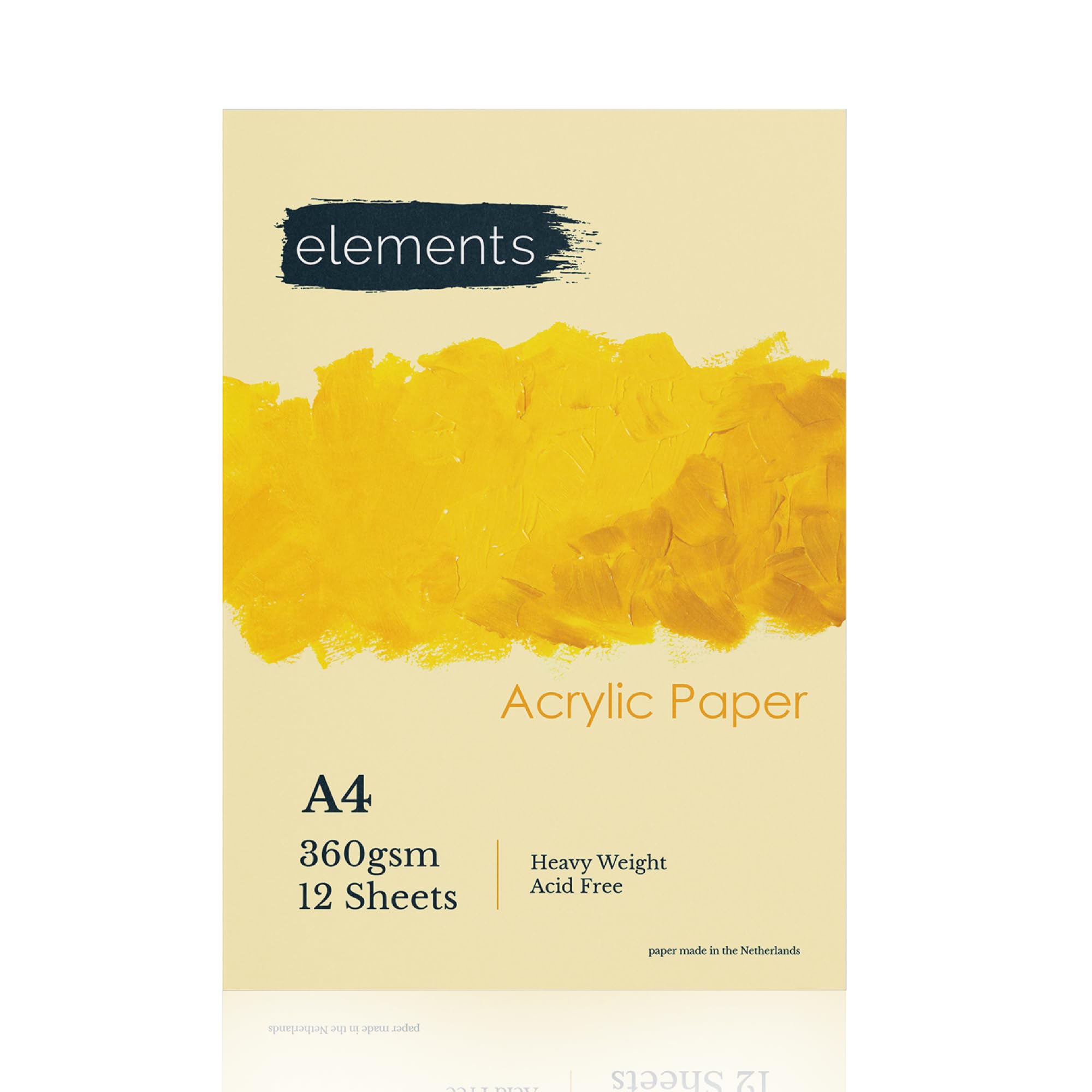
This 360gsm acrylic paper pad delivers reliable performance for water-based paints at a price point that won’t break the bank.
Pros
- Heavyweight 360gsm sheets handle multiple paint layers without warping or bleeding through
- Glue-bound format makes removing finished artwork clean and effortless
- Textured surface grips paint well and works brilliantly for both acrylics and gouache
Cons
- Only 12 sheets per pad means frequent replacements for regular painters.
- A4 size limits the scale of artwork you can create.
We found the paper weight impressive during our recent painting sessions. The sheets stayed flat even when we applied thick acrylic washes, which is something cheaper papers struggle with. The surface texture provides just enough tooth to hold paint without feeling overly rough.
Removing sheets from the glue binding worked smoothly every time. We didn’t experience any tearing along the edges, making it simple to frame finished pieces or share them without ragged borders.
The textured finish took some getting used to at first. It creates interesting effects with dry brushing techniques, though artists who prefer ultra-smooth applications might find it challenging. We appreciated how well it handled wet-on-wet techniques without the paper buckling.
For the number of sheets included, we found ourselves running through pads quickly during intensive painting sessions. The A4 size suits sketching and studies perfectly, but larger compositions require stepping up to a different format. The acid-free composition gives us confidence that our work will last without yellowing over time.
5. Artme A4 Acrylic Pad (2 Pack)

This heavyweight paper pad delivers reliable performance for acrylic painting at a budget-friendly price point.
Pros
- The 400gsm weight handles wet media without warping or buckling
- Smooth surface texture works brilliantly for layering and blending acrylics
- Two pads in one package offers excellent value for regular practice sessions
Cons
- Removing sheets from the pad often results in torn or messy edges.
- Only 12 sheets per pad means you’ll run through them quickly.
- Some pages arrive with dents or pressure marks from packaging.
We found the paper surprisingly robust when working with multiple layers of acrylic. The surface stays put even when applying generous amounts of paint, which isn’t always the case with paper in this price range.
The smooth texture makes blending colours quite enjoyable. We didn’t experience any pilling or surface breakdown, even when scrubbing with a stiff brush to create texture.
That said, the binding system causes frustration. Tearing sheets out cleanly proved nearly impossible without damaging the edge. We ended up using scissors to trim the perforated side, which added an extra step to our workflow.
The A4 size suits sketching and studies perfectly. We appreciate having 24 sheets total across both pads, though serious painters will need to restock frequently. The natural white background lets colours shine without any unwanted tinting.
For students or hobbyists doing regular practice work, this pad performs well above its modest price. Professional artists might want something with better sheet separation, but we can’t argue with the quality-to-cost ratio here.
What to Look for in Acrylic Painting Paper
When we’re shopping for paper suited to acrylic paint, we need to consider several key factors that affect both our painting experience and the final results.
Weight and Thickness
Paper weight matters significantly for acrylic work. We recommend looking for paper that’s at least 300 gsm (grams per square metre). Heavier paper handles the moisture from acrylics without warping or buckling. Lighter papers may work for thin applications, but they often require mounting or stretching.
Surface Texture
The texture of paper influences how paint applies and appears. We should consider these common finishes:
- Hot-pressed: Smooth surface ideal for detailed work
- Cold-pressed: Medium texture suitable for most techniques
- Rough: Heavy texture that adds character to paintings
Sizing and Priming
Papers designed for acrylics typically include sizing or priming. This treatment creates a barrier that prevents paint from soaking too deeply into fibres. We find that pre-primed papers save time and provide better colour vibrancy.
Format Options
Consider what format suits your working style:
| Format | Best For |
|---|---|
| Pads | Practising and sketching |
| Blocks | Preventing warping during work |
| Loose sheets | Custom sizing and mounting |
| Rolls | Large-scale projects |
Acid-Free Content
We always check that paper is acid-free. This ensures our artwork won’t yellow or deteriorate over time. Archival quality matters for pieces we want to preserve.
| Product | Rating | Price |
|---|---|---|
| STATIONERY ISLAND A4 Acrylic Paper ★ BEST BUY | ★★★★★ | Check Price |
| Zieler Acrylic Painting Pad | ★★★★ | Check Price |
| Artme A4 Acrylic Pad | ★★★★ | Check Price |
| Elements A4 Acrylic Paper Pad | ★★★ | Check Price |
| Artme A4 Acrylic Pad (2 Pack) | ★★ | Check Price |
The STATIONERY ISLAND A4 Acrylic Paper is our top pick for the best paper for acrylic paint. Its 300gsm weight, cold-pressed texture, and spiral binding combine to create a versatile, reliable surface that handles everything from detailed work to bold layering techniques.